Elfen Lied Anime: The Series Explained
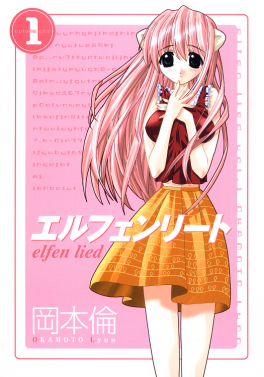
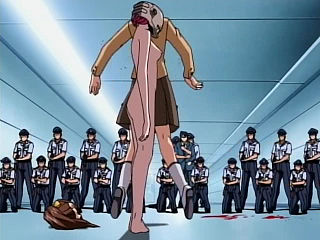
The Elfen Lied anime opens with a naked girl calmly ripping the arms, legs, and heads off an entire squad of armed guards while a gentle Latin hymn plays over the carnage. That single scene tells you everything about the beautiful, sickening trap this show is about to spring on you.
One minute you are watching a soft, pastel opening with an angelic choir, and the next you are watching heads fly off shoulders and blood paint the walls. This 2004 cult classic built a reputation as one of the most gorgeous and most disturbing anime ever made, and fans still argue about it more than two decades later. So let’s get into what makes the Elfen Lied anime tick, who Lucy really is, why the Diclonius are so terrifying, and why that ending still messes people up.
If you have heard the name whispered on anime forums with a mix of awe and dread, you are in the right place. We are going to cover the premise, the tragic girl at the center of it all, the science-fiction species called the Diclonius, the wild supporting cast, and the finale everyone has an opinion about. Fair warning, we are spoiling things, because you cannot really explain Elfen Lied without the gore and the tears.
What Is the Elfen Lied Anime About?
The Elfen Lied anime aired on AT-X from July 25 to October 17, 2004, running for 13 episodes plus a single bonus OVA that dropped on April 21, 2005. It came from studio Arms, directed by Mamoru Kanbe, and it is based on the seinen manga by Lynn Okamoto that ran in Weekly Young Jump from 2002 to 2005. The 13-episode run only adapted roughly the first seven volumes of that manga, which is a big reason the anime feels so rushed and open-ended. So yes, this is grown-up material, and it never pretends otherwise.
The story is set in the seaside city of Kamakura, Japan. Off the coast sits a shadowy research facility where scientists lock up and experiment on a new mutant species. Our main girl escapes from that facility in the very first scene, and she does it by shredding every guard between herself and the exit. She takes a bullet to the head on the way out, washes up on a beach, and gets found by two kind locals. That head wound scrambles her brain and leaves her with the mind of a toddler, and from there the whole tragic snowball starts rolling downhill.
At its core, this is a show about what happens when society decides some people are not really people. It leans hard into abuse, discrimination, loneliness, and revenge. The pretty animation and sweet music are basically bait that makes the brutal parts land twice as hard. You let your guard down, you start to care, and then the show rips your heart out on purpose.
Meet Lucy: The Diclonius at the Heart of It All
You cannot talk about the Elfen Lied anime without talking about Lucy. She is the whole soul of the series, and she is one of the most tragic characters in anime, full stop.

Lucy is a Diclonius, a horned mutant with terrifying powers, and the story of Lucy in Elfen Lied is basically a case study in how cruelty creates monsters. As a kid she was bullied brutally, mocked as a freak, and pushed past her breaking point in one of the most gut-wrenching flashbacks in the whole show. The scene where her only friend betrays her and a group of children beat her puppy to death is the exact moment something inside her breaks for good. When people treat you like a beast for long enough, you start to act like one, and that is the tragedy the series keeps hammering home.
Here is the twist that makes Lucy so fascinating. After that head injury during her escape, she splits into a second personality named Nyu. Nyu is a wide-eyed innocent who can barely say her own name and just wants to hug everyone in the room. So you get this same girl flipping between a mass-murdering force of nature and a giggling sweetheart, sometimes inside the same episode. Watching Kohta and the others fall for Nyu while having no clue what Lucy has done is pure emotional whiplash, and it is fantastic television.
By the end there is even a hint of a third, darker personality lurking underneath the other two. Lucy contains multitudes, and every single version of her is hauling around a mountain of pain she never asked for.
What Exactly Is a Diclonius?
The Diclonius are the science-fiction backbone of the whole franchise, so let’s break them down. A Diclonius looks almost human, except for two little horns poking out of the head that honestly read more like cat ears. Cute, right? Do not be fooled.
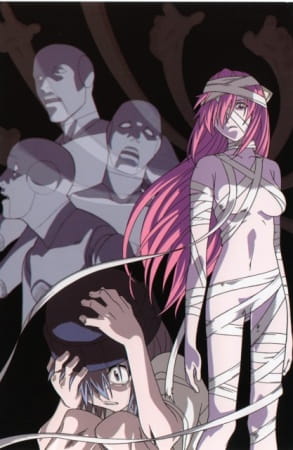
Every Diclonius comes equipped with vectors, which are invisible telekinetic arms that shoot out from the body. These things slice through steel, concrete, and human bodies like they are made of wet paper. The catch is that vectors only reach a certain distance. A standard Diclonius tops out around two meters, and some of them reach much farther. Nana can stretch hers to roughly five meters, and Mariko has the single longest range on record in the facility. Lucy’s range is shorter than you would expect for someone so feared, but her raw strength, her sheer number of vectors, and the body count she racks up when she truly cuts loose are what keep the scientists awake at night. When she stops holding back, her reach explodes to a scale nobody else can match.
The show frames the Diclonius as the next step in human evolution, a species built by nature to replace us. They can even spread their genes through a kind of infection, which is the nightmare scenario the scientists are desperate to contain. That fear is what supposedly justifies all the horrific experiments, and it is what keeps the moral question spinning. Are the Diclonius really born killers, or are humans the ones who forge them into weapons? Elfen Lied never lets you off the hook with an easy answer.
The Cast Around Lucy
Lucy may be the star, but the supporting cast is what gives the Elfen Lied anime its heart. Let’s meet the crew.

Kohta is the college student who takes Nyu in, and he carries his own buried trauma that ties back to Lucy in a way that is genuinely devastating once the show finally reveals it. Yuka is his cousin who lives with him and spends most of the series flustered and jealous while trying to keep the whole household from collapsing.
Then there is Nana, and oh boy, Nana will wreck you. She is another Diclonius raised inside the facility who calls her handler Kurama “Papa” and just wants to be loved. She is sweet, loyal, and treated horribly, and her brutal fight against Lucy, which costs her several limbs, is one of the most upsetting scenes in the entire show.
Mariko is a Diclonius kept strapped to a wheelchair and used as a living weapon, and she is terrifyingly powerful with dozens of vectors and that record-breaking range. Kurama is the facility director juggling his cold duty with his crushing guilt. Bando is a hot-headed special forces soldier who becomes obsessed with getting revenge on Lucy after their first encounter leaves him in pieces. And Mayu is a homeless runaway girl with her little dog Wanta, and she brings some of the only genuine warmth the show has to offer.
Every single one of these characters is carrying trauma, abuse, or loss. Elfen Lied does not do happy, well-adjusted people, and that is kind of the entire point.
Why the Elfen Lied Anime Got So Notorious
Let’s be honest about the elephant in the room. Elfen Lied is famous partly because it is shockingly violent. The very first episode features that naked girl calmly tearing apart a room full of armed men, and the show never really tones it down after that.
Limbs get ripped off. Heads pop like grapes. Blood sprays across every surface. There is also a lot of nudity, some of it played for cheap laughs and some of it tied directly to the darker themes of exploitation and abuse. When ADV Films released it in the West back in 2005, it became one of their most talked-about titles precisely because of how far it pushed things. It earned its notorious reputation fairly, and it wears that reputation like a badge.
But here is why people still respect it instead of dismissing it as pure shock trash. The violence is not random. It is baked into the show’s message about how cruelty breeds more cruelty. Every horrific act is tied to the theme of dehumanization, and the gorgeous animation and that haunting opening song “Lilium” keep reminding you that beauty and horror are sitting right next to each other.
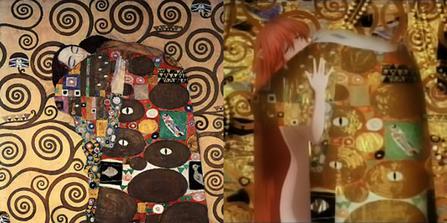
Speaking of “Lilium,” here is that haunting Latin opening in full.
The Elfen Lied opening theme “Lilium.” Via YouTube.
If you love dark, tragic stories, this one belongs on your list, and if gore is a dealbreaker for you, consider this your official heads-up to skip it. Fans who chase this kind of grim tone often overlap with the crowd who follow edgy indie streamers too, so if you are new to that scene our guide on what a VTuber actually is is a fun rabbit hole.
The Elfen Lied Ending Explained
Now for the part everyone asks about. The Elfen Lied ending is famously messy, and that is because the anime aired while Okamoto was still writing the manga. The show had to invent its own conclusion, so the anime ending and the manga ending are two completely different beasts.
In the anime finale, Lucy tearfully apologizes to Kohta for everything she has done, including the childhood horror that connects them. Kohta cannot fully forgive her, but he makes her promise to never kill again, and she agrees. She heads out to surrender herself, and that is when Kurama ambushes her and opens fire. Lucy is ready to just accept death, but her emerging darker personality kicks in and slices off his arm. Kohta throws himself in the way to protect her, and something inside her snaps all over again. Her vectors extend to an insane range and she goes on a full rampage, tearing the city apart while the military rains fire down on her.
The very last scene is where the real debate lives. Some time later, someone rings the doorbell at Kohta’s home, and we see two familiar horned silhouettes standing on the same steps where Lucy and Kohta had their final conversation. The show never confirms who it is. Did Lucy somehow survive? Is it a brand new Diclonius? Is it a dream, or a memory, or a promise kept? Fans have argued about the Elfen Lied ending for twenty years, and honestly that open-ended gut punch is a huge part of why the series sticks with people. The manga wraps things up far more concretely, so if you need actual closure, that is where you go.
Should You Watch the Elfen Lied Anime Today?
So after all that, is the Elfen Lied anime still worth your time in 2026? For a lot of us, absolutely yes.
Here is the official trailer if you want a taste of the tone before you commit.
Official Elfen Lied trailer. Via YouTube (AnimeLab).
It is a product of the mid-2000s, so the pacing can feel rushed and 13 episodes is nowhere near enough room for everything Okamoto wanted to say. Some of the fan service has aged awkwardly. But the emotional core still lands like a freight train. The tragedy of Lucy, the cruelty of the world she was born into, and that unforgettable “Lilium” opening have kept this show in the conversation for two full decades and counting.
If you like psychological horror, tragic anti-heroes, and stories that flat out refuse to comfort you, this is essential viewing. Lucy’s pinkish hair and horns have become such an iconic look that you still spot her all over cosplay lineups and even inspiring streamer avatars, right alongside the white and silver-haired VTubers fans adore. Just go in knowing exactly what you are signing up for. Elfen Lied is a beautiful nightmare, and it wants you to feel every single second of it.
Frequently Asked Questions
Is the Elfen Lied anime finished?
Yes, the anime is complete at 13 episodes plus a single OVA that acts as a side story set during the events of episode 11. It never got a second season, so the TV series ends on that famous ambiguous note. If you want the full story with a proper conclusion, you will need to read Lynn Okamoto’s manga, which runs 12 volumes and ties everything together.
How violent is Elfen Lied really?
Very. This is one of the goriest mainstream anime out there, with dismemberment, decapitation, and heavy blood right from episode one. There is also frequent nudity and some genuinely disturbing themes around child abuse and torture. It is strictly for adult viewers, so do not put this one on around the family.
Who is Lucy in Elfen Lied?
Lucy is the main character and one of the most powerful Diclonius in the series. She was abused as a child until she snapped and turned her rage on humanity. After a head injury she develops a childlike alter ego named Nyu, and the show bounces between her two personalities. Her tragic backstory is the emotional engine of the entire series.
What are the Diclonius?
The Diclonius are a mutant offshoot of humanity with two horn-like protrusions on their heads and invisible telekinetic arms called vectors. Those vectors can shred almost anything within their reach, which makes even a small Diclonius incredibly dangerous. The story treats them as a potential replacement species for humans, which is exactly why the facility fears and experiments on them.
Does Lucy die at the end of Elfen Lied?
The anime never says for sure. During the finale Lucy goes on a massive rampage and the military attacks her, so it looks like she does not survive. But the final scene shows two horned figures ringing Kohta’s doorbell some time later, leaving her fate wide open. That deliberate mystery is one of the most debated parts of the whole series.
Is the manga different from the anime?
Yes, quite a bit. Because the anime was made while the manga was still ongoing, and only adapted about the first seven volumes, the two versions split apart, especially near the end. The manga gives much more detail on the Diclonius, the Kakuzawa family, and the science behind everything, and it delivers a far more definitive ending. Fans who love the anime almost always recommend following up with the manga.