Cosplay Meaning: What Cosplay Is and Where It Came From
One woman sewed a green satin cape in 1939 and accidentally launched a global obsession that now pays its biggest stars over a million dollars a year. That is the cosplay meaning in a nutshell, and trust us, the full story is even wilder than that jump sounds!
You have seen the photos. Someone at a convention dressed head to toe as Nezuko, a full Gundam suit built out of foam, or a whole friend group decked out as the entire Sailor Scouts lineup. You probably thought, okay, that is cosplay. But the cosplay meaning goes way deeper than a costume and a wig, and the origin story runs through decades of fan history that most people have never heard. So let’s break it all down! We’ll cover the real cosplay meaning, what cosplay actually is, where it started, how anime cosplay took over the planet, who is getting rich off it, and the etiquette rules every fan needs before they hit a con. Grab your glue gun!
Cosplay Meaning: What the Word Actually Means
Let’s start with the basics, because the cosplay meaning is simple once you spot the trick behind the word. “Cosplay” is a smoosh of two English words, “costume” and “play.” Mash them together, chop off the extra bits, and you get cosplay. That is the whole cosplay definition right there.
Here is the fun twist though. The word did not get invented in America, even though both source words are English. It came out of Japan. A Japanese writer named Nobuyuki Takahashi coined it in the 1980s, and he built it using a classic Japanese shortcut. In Japanese, “costume” becomes kosu and “play” becomes pure, and jamming the front pieces of two words together into a brand new one is a super common move over there. So the meaning of cosplay is baked right into its DNA. You wear a costume, and you play a character. That is it!
Why this word beat the old term matters too. Before “cosplay” existed, English speakers called the hobby “masquerade.” Takahashi thought masquerade sounded stuffy and old-fashioned, like powdered wigs and stiff nobles at a fancy ball. He wanted a fresh word for a fresh hobby, so he made one. And it stuck. Hard.
What Is Cosplay, Really?
Now that you have the cosplay meaning locked in, let’s answer the bigger question. What is cosplay when you actually watch it happen in front of you?
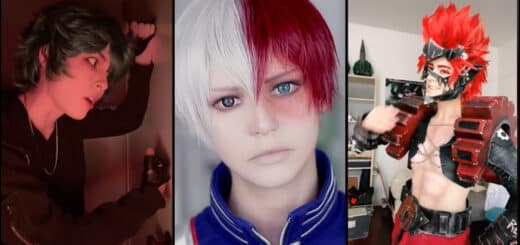
Cosplay is a performance art. That is the key word, performance. It is not just slapping on a Naruto headband and calling it a day. Real cosplay means dressing as a specific character from anime, manga, video games, movies, comics, or shows, and then bringing that character to life. Cosplayers nail the costume, sure, but they also copy the poses, the facial expressions, the little quirks, and sometimes even the voice. When you see someone in a razor-sharp Deku costume throwing a Detroit Smash pose, that is the play half of cosplay doing its job.
The craft side is no joke either. Plenty of cosplayers sew their own outfits from scratch, sculpt armor out of EVA foam, style wigs for hours, wire up LED accents, and airbrush props until they look screen-accurate. Some sink weeks or even months into a single build. Others buy their costumes and pour all their energy into the acting and the posing. Both count! There is zero gatekeeping rule that says you have to hand-stitch every seam to be a real cosplayer.
And here is the part fans love most. Cosplay lets you become someone else for a day. You step into your favorite character, you meet other people who love that same character, and you just have a blast together. That feeling of belonging is a massive reason the hobby blew up the way it did.
Where Cosplay Started: The Sci-Fi Convention Days
Here is where the origins get juicy. The cosplay meaning we use today traces back to Japan, but the actual activity is way older than the word. Fans were dressing up long before anyone called it cosplay.
Rewind all the way to 1939. The very first World Science Fiction Convention, better known as Worldcon, was held at Caravan Hall in New York City. Two fans named Forrest J. Ackerman and Myrtle R. Douglas, who went by the nickname Morojo, traveled all the way from California, and they turned up in what they proudly called “futuristicostumes.” Morojo designed and sewed the outfits herself, drawing on the pulp sci-fi art of Frank R. Paul and the 1936 film Things to Come. Picture green satin capes and sharp art deco shoulders. Ackerman honestly thought everyone was supposed to wear a costume to a sci-fi convention, so he and Morojo were the only two who showed up in gear. The rest of the room lost their minds. Nobody had seen anything like it.
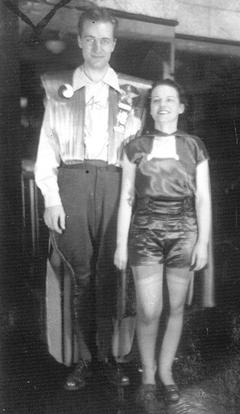
That single moment is widely called the birth of cosplay. The International Costumers’ Guild even honors Ackerman as the Father of Convention Costuming and Morojo as the Mother, which means the very first cosplay costume was designed and stitched by a woman who deserves way more credit than she usually gets. Give it up for Morojo!
A year later in 1940, the second Worldcon in Chicago ran the first official masquerade. For the next couple of decades it was basically a costume ball, complete with a band, drinks, dancing, and prizes at the end of the night. By the 1970s these masquerades had ballooned to more than a hundred costumed fans strutting their stuff every year. The hobby was growing fast. It just did not have its snappy name yet.
How the Word “Cosplay” Was Born
So how did we get from “masquerade” to the cosplay meaning we know today? Cue Nobuyuki Takahashi again.
In 1984, Takahashi, who founded a Japanese company called Studio Hard, flew over to attend LA.Con II, that year’s Worldcon in California. He was there as a fan writer, planning to report back to readers in Japan about what American conventions were actually like. When he saw the masquerade and all the jaw-dropping costumes, he needed a word to describe the spectacle for his articles. So he coined “cosplay.” His write-ups landed in the Japanese magazine My Anime and helped push the term into everyday fan vocabulary.
Costuming was already a growing fan thing in Japan through the 1970s, but Takahashi’s reports poured gasoline on the fire. Once the word “cosplay” existed and Japanese fans read all about the wild American convention scene, it spread like wildfire back home. The name handed the whole thing an identity, and an identity is powerful. Suddenly this was not just people in costumes at a party. It was cosplay, a movement with a name of its own.
How Anime Cosplay Took Over the World
This is the part you have probably been waiting for. Anime cosplay is what most people picture the second they hear the cosplay meaning, and there is a very good reason for that. Anime hands fans big, colorful, instantly recognizable designs that look incredible on camera and even better in person.
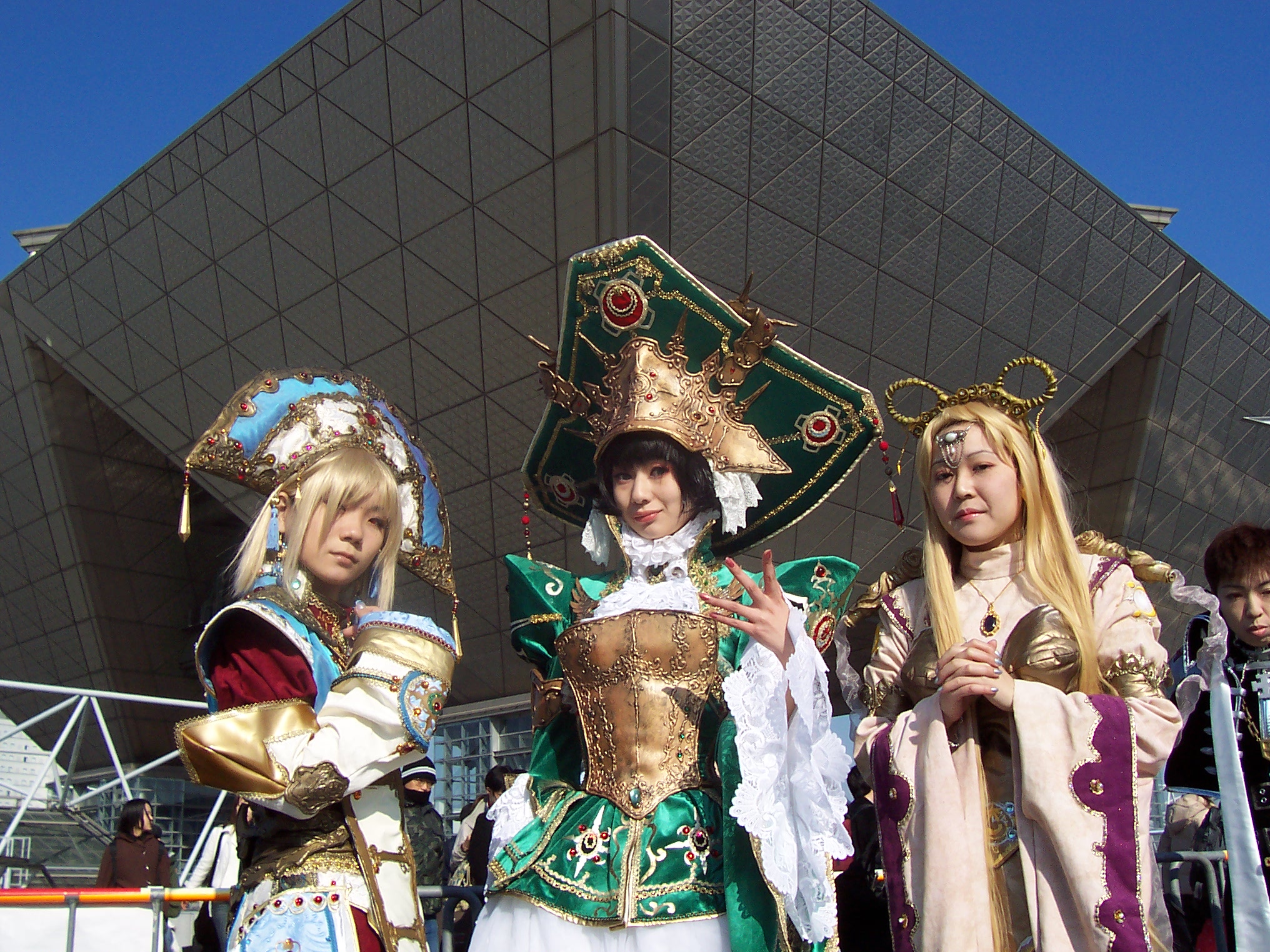
Japan had the perfect storm brewing right as the word was catching on. The 1979 TV series Mobile Suit Gundam and the 1978 manga Urusei Yatsura handed fans bold, striking characters they were desperate to dress up as. Anime cosplay started snowballing at Japanese events, especially Comiket, the enormous fan convention in Tokyo that pulls in hundreds of thousands of attendees. Comiket has entire zones set aside for cosplay, and it became the beating heart of the whole scene.
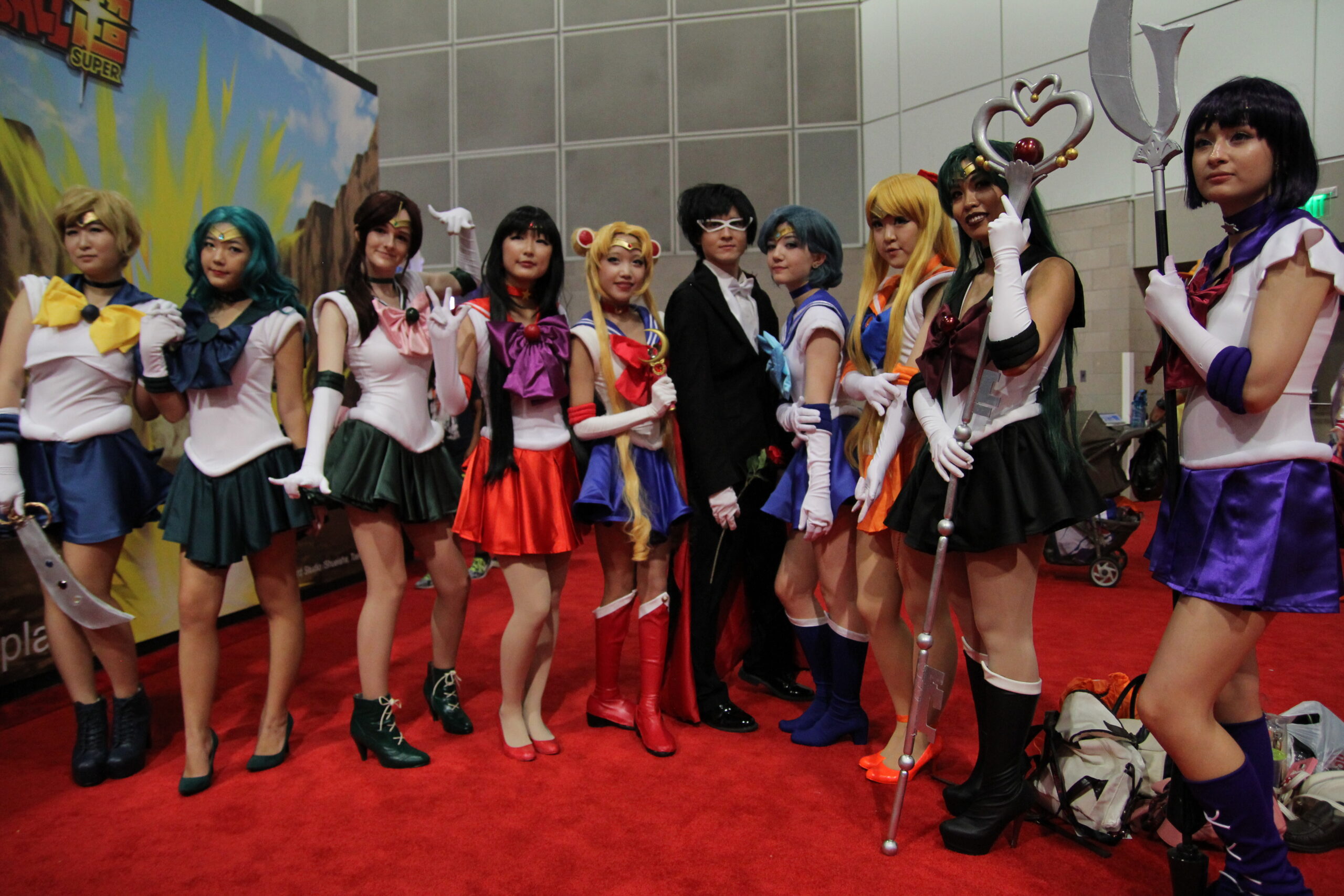
Then Sailor Moon detonated in the 1990s, and everything shifted again. Those sailor suits inspired a genuinely ridiculous number of fans to grab a miniskirt and a tiara. Anime cosplay stopped being niche and started spilling out everywhere, from Tokyo to Texas. Fast forward to today and shows like My Hero Academia, Demon Slayer, and Naruto absolutely dominate the con floor. Deku, Bakugo, Nezuko, and Naruto rank among the most cosplayed characters on the planet, racking up hundreds of thousands of hashtags at giants like Comic-Con every year.
Want to see anime cosplay in motion? This walkthrough captures the sheer scale and creativity on a modern convention floor.
Anime Expo 2024 cosplay music video by The L.A. Explorer, showing real anime cosplay across the con floor.
Anime cosplay also crosses over beautifully with other fan hobbies. If you love virtual creators, you already know cosplayers who dress as their favorite VTubers, and there is tons of overlap between the cosplay crowd and the fans chasing every VTuber face reveal. Fandoms love to mix, and cosplay is the glue that holds a lot of that crossover together!
Cosplay as a Full-Blown Career
Here is a fact that flat out shocks people. Cosplay is not just a weekend hobby anymore. For a lucky few, it is a serious paycheck.

Take Enako, Japan’s most famous professional cosplayer. Her manager revealed she pulled in over 200 million yen in revenue in 2022, which lands somewhere around 1.5 million dollars. That figure was four times what she reported back in 2020 and double her 2021 haul, so the growth is absolutely bonkers. She splits that revenue with her agency, and she juggles gigs as a cosplayer, idol, singer, and YouTuber all at once. She also owns hundreds of costumes, because when this is your job, wardrobe is a business expense!

Over in the West, Yaya Han is basically cosplay royalty. She spun her craft into an entire business empire, selling costume patterns, accessories, and her own fabric lines, plus a run of TV appearances judging cosplay competitions. Pros like these dragged cosplay from a fan quirk into a legit industry stacked with sponsorships, print sales, meet-and-greets, and huge social followings. So the cosplay meaning has quietly grown to include career, not just costume. Wild, right?
Cosplay Etiquette Every Fan Should Know
Okay, this section is the important one, so listen up. Understanding the cosplay meaning also means understanding how to treat cosplayers with basic respect. There is a golden rule the entire community lives by, and you will spot it on signs at pretty much every convention.
“Cosplay is not consent.”
What does that mean? It means a costume is never an invitation. A cosplayer dressing as a character does not owe anyone their time, their space, or their body, full stop. These are real people in costumes, not characters for you to grab. Here are the big etiquette rules that keep a con fun and safe for everyone:
- Do not touch a cosplayer, their costume, or their props without asking first. They spent weeks building that armor, and grabbing it is a huge no.
- Always ask before taking a photo, and let them pose. Nobody wants a creepy candid shot. Ask politely, and if a group photo is already happening, you can usually join right in.
- If someone says no to a photo, respect it instantly. No arguing, no sulking, no sneaking a shot anyway.
- Do not zoom in on parts of a cosplayer to be gross. Keep it classy.
- If a cosplayer is eating, resting, or clearly heading somewhere, let them be. Catch them later.
- Compliment the craft, not just the looks. Telling someone their prop work is insane feels a hundred times better than a comment about their body.
Follow these and you will be the kind of con-goer everyone loves. Break them and you are the exact reason those signs exist. Simple as that!
Frequently Asked Questions
What does cosplay mean?
The cosplay meaning comes from mashing “costume” and “play” together. It is the hobby of dressing up as a character from anime, manga, video games, movies, or comics, and then acting like that character. A Japanese writer named Nobuyuki Takahashi coined the word in the 1980s.
What is cosplay used for?
Cosplay is used to celebrate the characters and stories fans love. People cosplay to flex their creativity, show off their costume-building skills, connect with other fans at conventions, compete in masquerade contests, and just have fun becoming someone else for a day. For some pros it is also a full-time career.
Where did cosplay originate?
The activity started at the first Worldcon in New York City in 1939, when fans Forrest Ackerman and Myrtle Douglas showed up in “futuristicostumes” that Douglas designed and sewed herself. The word “cosplay” itself came later, coined in Japan by Nobuyuki Takahashi after he attended a Worldcon masquerade in 1984.
Is anime cosplay different from regular cosplay?
Not really, it is just a category. Anime cosplay means dressing as characters specifically from anime and manga, like Nezuko or Naruto. Regular cosplay is the same hobby but covers everything, including video games, movies, comics, and shows. The cosplay definition stays the same either way.
Do you have to make your own costume to cosplay?
Nope! Some cosplayers sew and sculpt everything from scratch, and others buy their costumes and focus on posing and acting. Both are 100 percent valid cosplay. There is no rule that says you have to build it yourself to count as a real cosplayer.
What does “cosplay is not consent” mean?
It means a cosplayer’s costume is never permission to touch, harass, or photograph them without asking. Always get consent before taking photos or making contact, respect a no, and treat every cosplayer with basic decency. It is the number one etiquette rule at conventions.
Related
- What’s A VTuber?
- VTuber Face Reveal: 13 Famous VTubers’ Faces Revealed
- Different Types Of VTuber Models
Wrapping Up
There you have it! The full cosplay meaning, from a two-word mashup coined in Japan to a global fan obsession worth millions. Cosplay started with two fans in handmade green capes at a 1939 sci-fi con, picked up its name from a writer chasing a better word than “masquerade,” and exploded into the anime cosplay powerhouse we see at every convention today.
Whatever character you dream of becoming, hold onto the three things that make this hobby special: the craft, the community, and the golden rule that cosplay is not consent. Now go build something awesome. Happy cosplaying, folks!