Anime OVA Meaning Explained: What Is an OVA?
You just smashed the final episode of your new favorite show, the credits are rolling, and there it sits at the bottom of the episode list taunting you: three little letters, OVA. Is it canon? Do you need it? Did you somehow watch the whole series in the wrong order?! Breathe. We got you. The anime OVA meaning is way simpler than the fandom makes it sound, and once it clicks, you will never scroll past one of these hidden gems again.
We are going to break the whole thing down in plain language. We will cover what OVA stands for, where these things came from back in the VCR days, how they stack up against TV episodes and movies, why studios keep cranking them out, and which legendary ones actually deserve a spot on your watchlist. By the end you will know exactly which OVAs are worth your night and which ones you can happily skip.
What Does OVA Mean? Let’s Define OVA in Anime
Time to define OVA in anime once and for all. OVA stands for Original Video Animation. In plain English, it is anime made specifically for home video release instead of airing on TV first or hitting theaters. That is it! No secret code, no hidden lore, no gatekeeping password.
Back in the day that meant a chunky VHS tape you grabbed off a store shelf. Later it meant LaserDiscs, then DVDs, then Blu-rays, and now digital editions you can buy and keep. The delivery method has swapped a bunch of times over the decades, but the core idea has stayed rock solid. When an anime skips the weekly TV schedule and the big screen and goes straight to a format you buy and own, that is an OVA. Simple as that.
You will sometimes see the exact same thing written as OAV, which stands for Original Animation Video. Same concept, letters just shuffled around. A lot of older fan communities and databases prefer OAV, especially for 80s and 90s titles, but OVA is the version that stuck and dominates today. If you spot either one out in the wild, treat them as identical twins and keep it moving.
So if a friend asks you to define OVA in anime, you can now answer in one clean sentence: it is anime built for home video, full stop.
Anime OVA Meaning: A Quick Trip Back to the 80s
Here is the genuinely fun part of the anime OVA meaning, the origin story. OVAs were born in the early 1980s, back when physical media was king, and the reason is beautifully simple: everybody suddenly owned a VCR.
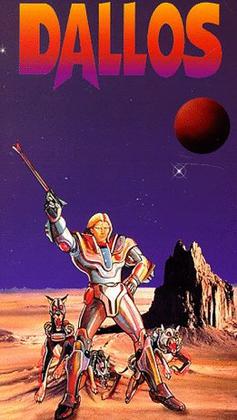
Once video cassette recorders became a normal fixture in Japanese homes, the anime industry had a lightbulb moment. Fans no longer had to sit around waiting for something to air on a network’s schedule. People would happily march into a video store and buy brand new animation outright, then watch it on their own couch, on their own time, as many times as they wanted. Demand went through the roof. Studios saw a wide open market sitting right there and pounced on it.
The very first release billed as an OVA was Dallos in 1983, a sci-fi title directed by Mamoru Oshii (the future mastermind behind Ghost in the Shell) and produced at Studio Pierrot, with Bandai handling the video release. The first episode dropped on VHS in December 1983, and that one modest four-part project cracked the door wide open. The whole industry came pouring through behind it. The 80s and 90s turned into a straight-up golden age for the format. Studios could tell weirder, edgier, more experimental stories precisely because they were not chained to a TV network breathing down their neck about content, timeslots, or advertiser-friendly ratings.
That freedom is exactly why so many cult classics from that era exist at all. The OVA boom bankrolled ambitious sci-fi, gory action, and niche passion projects that no broadcaster would have touched. So the next time someone drops the “anime OVA means” question in a group chat, hit them with the history lesson. It is not some random bonus episode tacked on as an afterthought. It is a format that literally helped build the modern anime industry we all obsess over today.
What Does OVA Mean Next to TV Anime and Movies?
This is where most people get their wires crossed, so let’s untangle it. The OVA meaning in anime really snaps into focus once you line it up side by side with the two formats you already know cold.
TV anime airs on a broadcast schedule, usually one episode a week, with all the baggage that comes with television. There are timeslots to fill, censorship standards to satisfy, sponsors to keep happy, weekly cliffhangers to deliver, and budgets stretched thin across a whole cour or two. TV is the marathon. It is built for consistency and volume, not for a single knockout punch.
Anime movies go to theaters first. They get the fattest budgets, the most polished frame-by-frame animation, and a single self-contained story engineered for the big screen and a two-hour sit. Movies are the special event, the night you actually leave the house for.
OVAs live in their own lane right between those two. They release straight to home video with no broadcast slot and no theatrical run to answer to. Because an OVA is not fighting for a timeslot, it can be literally any length the studio feels like making. Some are a single tight 30-minute episode. Some are a sprawling two-hour epic. Some run for dozens of episodes stacked up across years. There are no rigid rules boxing them in, and that freedom is the entire point of the format.
One more thing fans adore about OVAs: they often look downright gorgeous. Studios usually hand an OVA a bigger per-episode budget and more calendar time to finish the work than the brutal weekly TV grind ever allows. That extra breathing room shows up right there on your screen, in the extra detail, the smoother motion, and the sheer animation quality. When you hear people say an OVA “looks like a movie,” this is why.
Why Studios Actually Make OVAs
Okay, so what does OVA mean for the people making them? Two words: money and creative freedom. Why would a studio pour cash into anime that skips TV entirely? There are a handful of very solid reasons, and once you clock them you will start recognizing every type of OVA out there instantly.
Side stories and bonus episodes. A studio might make an OVA that plugs a gap between seasons, hands a fan-favorite character their own spotlight, or tells a goofy non-canon adventure just for kicks. These are your classic “beach episode” and “hot springs episode” bonuses that ship tucked inside a Blu-ray box set to reward the fans who happily pay for more of a show they already love.
Test runs for a bigger project. This one is huge. A ton of famous series quietly started life as an OVA before exploding into full TV shows or movies. Tenchi Muyo, Gunbuster, and Ah! My Goddess all kicked off as OVAs, proved they had a hungry audience, and then leveled up into massive franchises. Studios use the format like a demo tape, testing the waters without committing to a whole broadcast season and a network deal.
Manga bundles. Publishers love packaging a short new anime episode with a special edition of a manga volume. You buy the book, you get an exclusive episode inside the box. It moves copies and it rewards the diehard fans who buy physical, which keeps everybody happy.
Freedom to go wild. No TV censors means OVAs can lean way harder into violence, fanservice, or flat-out experimental storytelling. Shows that would get sliced to ribbons on broadcast can run completely uncut on home video, exactly the way the creators intended. When a studio wants to do something weird or adult, an OVA is the safest place to do it.
OVA vs ONA vs OAD: Sorting the Alphabet Soup
Here is where the acronyms start breeding, so let’s clear the board before your brain melts. Once you understand what an OVA is, these cousins are honestly easy to keep straight.
ONA stands for Original Net Animation. Same core idea as an OVA, but instead of releasing on a physical disc first, it drops online. Same idea, different distribution. The term popped up in the early-to-mid 2000s as streaming started eating the world, and it has only gotten more common since. Netflix originals like Cyberpunk: Edgerunners and JoJo’s Bizarre Adventure: Stone Ocean are ONAs. The line between OVA and ONA gets blurrier every single year, but the quick cheat is dead simple. Disc first equals OVA. Internet first equals ONA.
OAD stands for Original Animation DVD, sometimes written as Original Animation Disc. An OAD is basically an OVA with one specific job: it almost always comes bundled with a manga volume as a companion release. If you have ever bought a limited edition manga that came with a little disc tucked into the packaging, congratulations, you already own an OAD and did not even know it.
So the whole family tree lines up like this. OVA is the parent term for home video anime. OAD is an OVA that ships strapped to a manga. ONA is the streaming-era version that goes online first. Different letters, exact same DNA.
Famous OVAs That Prove the Format Rules
Talk is cheap, so let’s name some names. These are the OVAs that actually earned their reputation, and they show off exactly why the anime OVA meaning matters so much to fans. If you want proof of what this format can pull off when the leash comes off, start right here.
Hellsing Ultimate is the absolute poster child. The first TV series was messy, watered down, and filler-heavy. The Ultimate OVA run is a bloody, stylish masterpiece that adapted Kouta Hirano’s manga faithfully, fully uncut and totally unhinged, with jaw-dropping animation and buckets of violence that broadcast TV would never in a million years allow. It is the cleanest example of the creative freedom OVAs hand their creators.
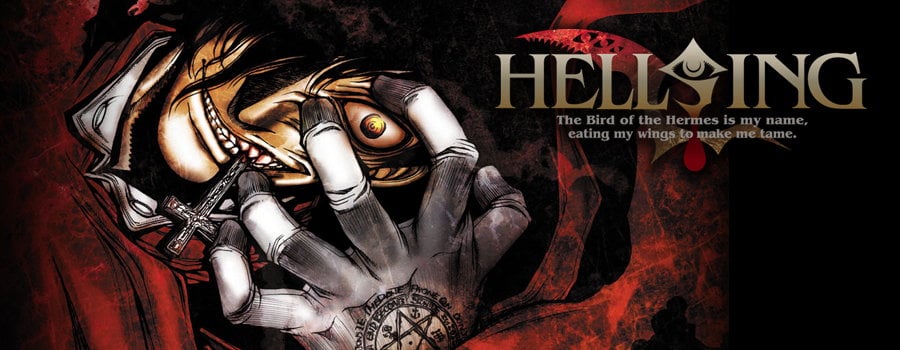
Official trailer for the Hellsing Ultimate OVA collection:
Rurouni Kenshin: Trust and Betrayal takes the wandering, wisecracking TV Kenshin and delivers a dead-serious, achingly beautiful backstory about his days as a cold-blooded assassin and the origin of that iconic cross-shaped scar. Tons of fans rank it among the most beautiful anime ever made, and it only exists because the OVA format let the studio go dark, quiet, slow, and genuinely cinematic without a single network note in the way.
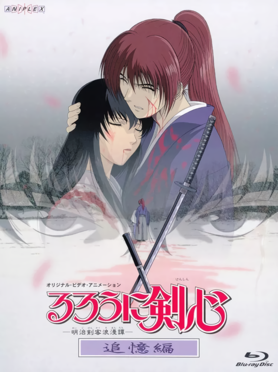
Trailer for Rurouni Kenshin: Trust & Betrayal:
FLCL crams mecha, comedy, and coming-of-age chaos into just six gloriously deranged episodes. It is weird, loud, and deeply emotional all at once, endlessly rewatchable, packed with iconic needle-drop music, and completely unlike anything that has ever aired on regular TV. A perfect example of what the format can do when it is firing on all cylinders.
Then there are the sheer giants. Legend of the Galactic Heroes ran an absolutely absurd 110 episodes entirely as an OVA, released in home-video installments between 1988 and 1997, building one of the most respected sci-fi epics in the entire medium along the way.
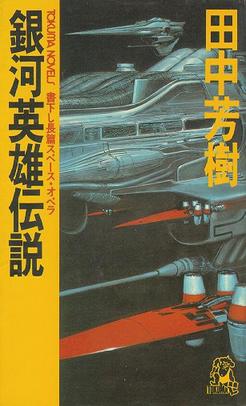
Legend of the Galactic Heroes, the 110-episode OVA saga (Kitty Films / Artland). Cover of the original Tanaka novel, first edition. Source: Wikipedia. That single stat alone proves the format has no size limit whatsoever. An OVA can be a quick 25-minute treat or a decade-spanning galactic war saga, and both are equally legit.
If you love how VTubers and anime creators constantly borrow from these classics, you will start noticing OVA references popping up all over streams, karaoke picks, and fan art across communities like Hololive and Nijisanji. Once you know the lingo, you catch the shout-outs everywhere.
How to Fit OVAs Into Your Watch Order
Now for the practical stuff you actually came for. You know what does OVA mean by now, but the big question remains: when do you actually watch one? It all depends on the type sitting in front of you.
If the OVA is a side story or bonus episode, watch it whenever you like. These are dessert, plain and simple. They rarely touch the main plot, so just slot them in after the season they belong to and enjoy the extra time with characters you already love.
If the OVA is a prequel or an origin story, like Trust and Betrayal, you have a choice. Watch it early for a chronological ride, or save it for later so the backstory absolutely wrecks you once you already care about everyone involved. Honestly, the “later” route usually hits harder. Peek at a watch order guide for your specific show if you want the optimal experience.
If the OVA is an epilogue, lock it away for the very end. It is designed to send the story off with a proper goodbye, and watching it too early will spoil beats you have not earned yet. No cutting the line on this one.
When in doubt, the safe rule is simple: finish the main TV seasons first, then check whether fans treat the OVA as essential. The great news is that skipping an OVA almost never breaks a series for you. The vast majority are optional treats you can take or leave. But the truly great ones, the Hellsing Ultimates and the Trust and Betrayals of the world, are frequently better than the shows they spun off from. Do not sleep on those! Some of the best animation ever produced is hiding behind those three little letters.
Anime and VTubing overlap way more than you would think, and a whole lot of streamers first fell down the rabbit hole through exactly these kinds of deep-cut anime obsessions. If you are curious how that entire scene connects back to the shows you love, our guide on what a VTuber is is a perfect next stop.
Frequently Asked Questions
What does OVA mean in anime?
OVA means Original Video Animation. It is anime made specifically for home video release, like DVD or Blu-ray, instead of airing on TV first or showing in theaters. The format took off in the 1980s when VCRs became common in Japanese homes and fans started buying animation directly.
Is an OVA canon?
It depends entirely on the show. Some OVAs are fully canon side stories, prequels, or epilogues that expand the main plot in a real way. Others are non-canon bonus episodes made purely for fun, like beach or comedy specials. Check each series individually, because there is no single rule that covers all of them.
What is the difference between an OVA and an ONA?
An OVA releases on physical media like a disc first, while an ONA, or Original Net Animation, releases online first through streaming. The concept behind both is identical, only the initial delivery method is different. As streaming exploded, ONAs became far more common than they used to be, and the two labels now overlap a lot.
Do I have to watch OVAs?
Usually no. Most OVAs are optional extras that do not affect the core story at all. Still, some legendary OVAs like Hellsing Ultimate and Rurouni Kenshin: Trust and Betrayal are considered essential viewing and are often better than the TV versions, so they are absolutely worth your time.
Why do OVAs look better than TV anime?
Studios often give OVAs a bigger budget per episode and more production time than a punishing weekly TV schedule allows. Without a broadcast deadline forcing animators to cut corners, they can pile on extra detail, smoother motion, and serious polish, which is why so many OVAs look noticeably sharper than the shows they connect to.
What was the first OVA?
Dallos, directed by Mamoru Oshii and released by Bandai in 1983, was the first anime billed as an OVA. It kicked off a format that exploded in popularity through the 80s and 90s and helped shape the modern anime industry we know today.
Related
- What’s A VTuber?
- Hololive Productions: The Rise of the VTuber
- Nijisanji Project: Welcome to the World of 2D!
Wrapping Up
There you have it, the full anime OVA meaning with zero gatekeeping. An OVA is just anime made for home video, born from the VCR boom of the 80s, free from the rules of TV and the price tag of a movie. Some are throwaway fun, some are all-time masterpieces, and now you can tell the difference at a single glance. So go raid your backlog, hunt down those three little letters, and give the good ones the watch they have been waiting to earn. And if you have somehow never seen FLCL, fix that tonight. Happy binging!